
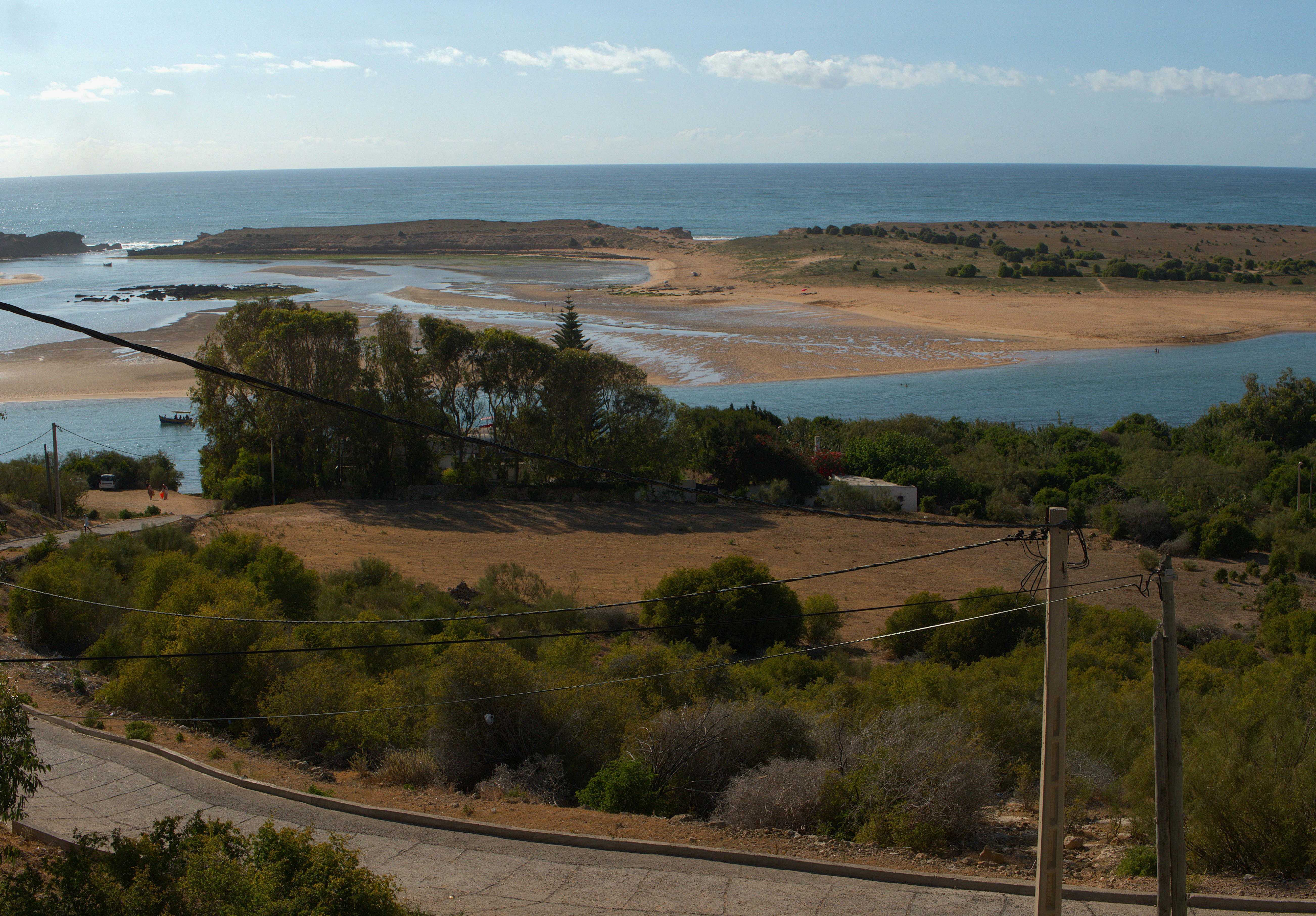
Oualidia is a small Atlantic coastal town in Morocco’s El Jadida province, built around a sheltered lagoon protected from the open ocean by a natural sandbar. The calm, shallow water inside the lagoon supports one of Morocco’s best-known oyster farming industries, while a point break just outside draws a smaller, steadier stream of surfers than the busier breaks further south. The result is a quiet coastal stop that mixes seafood, surf, and a long-standing reputation as a low-key royal retreat.
The Lagoon
Oualidia’s defining feature is its lagoon, a body of calm water separated from the Atlantic by a natural sandbar that breaks the force of the ocean swell. This sheltered setting keeps the water notably calmer than the open coast nearby, making it popular for swimming, kayaking, and paddleboarding even when the ocean beyond the bar is rougher. The lagoon’s shallow, nutrient-rich water is also what makes the surrounding oyster farms possible, tying the town’s culinary reputation directly to its geography.
Oyster Farming
Oyster cultivation has been established in Oualidia’s lagoon for decades, and the town is one of the more recognized oyster-producing areas in Morocco. Wooden racks and cages used for farming are visible along parts of the lagoon at low tide, and several small operations sell directly to visitors or supply the shacks and restaurants clustered near the water. The scale remains modest compared to major oyster-producing regions elsewhere, but it is enough to give Oualidia a distinct culinary identity within Morocco’s Atlantic coast.
Surfing at Oualidia
Outside the lagoon, Oualidia has a right-hand point break that works on a range of swell sizes, drawing surfers who prefer a quieter lineup than the well-known breaks around Taghazout further south. The lagoon itself offers flatter, more sheltered water better suited to beginners, stand-up paddleboarding, or families with children, giving the town two distinct types of water conditions within a short walk of each other.
The Royal Summer Palace
Oualidia has hosted a royal residence since the mid-20th century, when King Mohammed V had a summer palace built overlooking the lagoon. The palace is not open to the public, but its presence has shaped the town’s low-key, unhurried character over the decades, keeping large-scale resort development away from a stretch of coast that might otherwise have grown considerably busier.
Beaches Around Oualidia
Beyond the lagoon itself, the coastline around Oualidia includes several beaches with a mix of sheltered and more exposed conditions, popular with Moroccan domestic tourists especially during the summer months. Some stretches are reachable only by a short walk or drive from the town center, keeping them quieter than beaches directly adjacent to the main road.
Food in Oualidia
Seafood dominates Oualidia’s food scene, unsurprisingly given the lagoon and its oyster farms. Fresh oysters, clams, and other shellfish are served at simple shacks directly on the water, often eaten with little more than lemon, alongside more conventional restaurant options serving grilled fish and the usual range of Moroccan dishes. Prices for oysters and shellfish are generally lower here than in Morocco’s larger cities, given the direct proximity to where they are farmed. A few spots also serve tagine and couscous for visitors who prefer not to eat seafood.
Where to Stay
Accommodation in Oualidia ranges from simple guesthouses to a handful of larger hotels with views over the lagoon, generally at a smaller scale than the resort development found in places like Agadir. Several properties are positioned specifically to take advantage of lagoon views, and rooms with a direct outlook tend to book up faster during the busier summer weekends when Moroccan domestic travelers visit in larger numbers.
A Brief History of Oualidia
Oualidia takes its name from the Saadian sultan Moulay el Oualid, who had a fort built above the lagoon in the 17th century to help protect the coast. The town remained a modest fishing settlement for centuries afterward, and its development as a low-key retreat accelerated in the 20th century once the royal palace was established and oyster farming became a more organized local industry. This history left Oualidia without the larger-scale colonial-era architecture found in port cities like Essaouira or El Jadida, giving it a comparatively understated built environment centered on the lagoon itself.
Common Misconceptions
A common assumption is that Oualidia is a major resort town on the scale of Agadir or Essaouira. In practice, it remains a small, quiet town whose lagoon and oyster farms are its main draw rather than a large tourism infrastructure. Another misconception is that the lagoon and the surf break offer the same water conditions. The lagoon is sheltered and generally calm, while the point break outside it is exposed to full ocean swell, and the two should not be assumed interchangeable when planning a visit.
Best Time to Visit
Spring and early autumn generally bring comfortable temperatures for time on the water, whether in the lagoon or surfing the point break, without the peak crowds of the Moroccan summer holiday season. Summer weekends draw considerably more domestic visitors to the beaches and lagoon, so travelers wanting a quieter visit may prefer weekdays or the shoulder seasons. Winter is cooler and quieter still, with swell conditions that can suit more experienced surfers.
Practical Tips for Visiting
Oualidia is compact enough that a car is useful mainly for reaching it and for side trips rather than for getting around the town itself. Oyster and seafood shacks around the lagoon vary in formality, and asking locally for a current recommendation is more reliable than assuming any particular spot is the best, since turnover among small operators is common. Sun protection matters even on overcast coastal days, and swimmers unfamiliar with the point break should stick to the calmer lagoon rather than the exposed surf area.
Getting to Oualidia
Oualidia is roughly 170 km south of Casablanca, approximately 2.5 hours of driving along the Atlantic coastal road, and roughly 90 km south of El Jadida, approximately 1.5 hours. From Marrakech, it is roughly 250 km, approximately 3.5 to 4 hours, typically routed through the Doukkala region rather than directly along the coast. There is no commercial airport in Oualidia itself, so travelers generally arrive by car or organized transport from Casablanca or El Jadida. Shared grand taxis also connect Oualidia to El Jadida for travelers without their own vehicle.
Wildlife and the Lagoon Ecosystem
Oualidia’s lagoon and surrounding wetlands draw a range of coastal bird species, including flamingos and various wading birds that pass through or stop seasonally along this stretch of the Atlantic flyway. Birdwatchers occasionally visit specifically for this reason, though the lagoon is not as heavily promoted for birding as some of Morocco’s larger wetland reserves further south. The same calm, nutrient-rich water that supports the oyster farms also supports this broader coastal ecosystem, making the lagoon more than simply a scenic or recreational feature.
Day Trips from Oualidia
Travelers based in Oualidia for a few nights can use it as a base for exploring the wider Doukkala coast, including El Jadida with its Portuguese-built cistern and fortified old town, roughly an hour’s drive north. Further south, the route toward Safi and eventually Essaouira passes through smaller fishing villages and additional stretches of Atlantic coastline, making Oualidia a reasonable midpoint for travelers stringing together several coastal stops rather than driving the entire route in a single day.
How Oualidia Fits Into a Wider Morocco Trip
Oualidia works well as a coastal stop on a route connecting Casablanca or El Jadida with Essaouira further south, offering a quieter lagoon-and-oyster alternative to the more built-up beach towns along the same stretch of coast. It generally suits travelers building an Atlantic coastal itinerary rather than those focused on the classic Marrakech-to-desert route, given the distance and different geography involved.
Frequently Asked Questions
What is Oualidia known for?
Oualidia is known for its sheltered Atlantic lagoon, oyster and shellfish farming, a gentle point break popular with surfers, and a royal summer palace overlooking the water.
How far is Oualidia from Casablanca?
Oualidia is roughly 170 km south of Casablanca, approximately 2.5 hours of driving along the Atlantic coast.
Can you eat oysters in Oualidia?
Yes, several shacks and small restaurants around the lagoon serve oysters harvested from the surrounding oyster farms, usually eaten fresh with lemon.
Is Oualidia good for surfing?
Yes, Oualidia has a well-regarded right-hand point break outside the lagoon that draws surfers of varying skill levels, alongside calmer lagoon waters suited to beginners and families.
How far is Oualidia from Marrakech?
Oualidia is roughly 250 km from Marrakech, approximately 3.5 to 4 hours of driving along the coastal and inland roads through the Doukkala region.
Does the Moroccan royal family have a palace in Oualidia?
Yes, Oualidia has a royal summer residence overlooking the lagoon, a legacy of the town’s long-standing status as a low-key coastal retreat rather than a large resort destination.
Browse our Marrakech desert tours for the inland desert route, or see our full range of Marrakech tours if you’re planning a wider Morocco itinerary.