
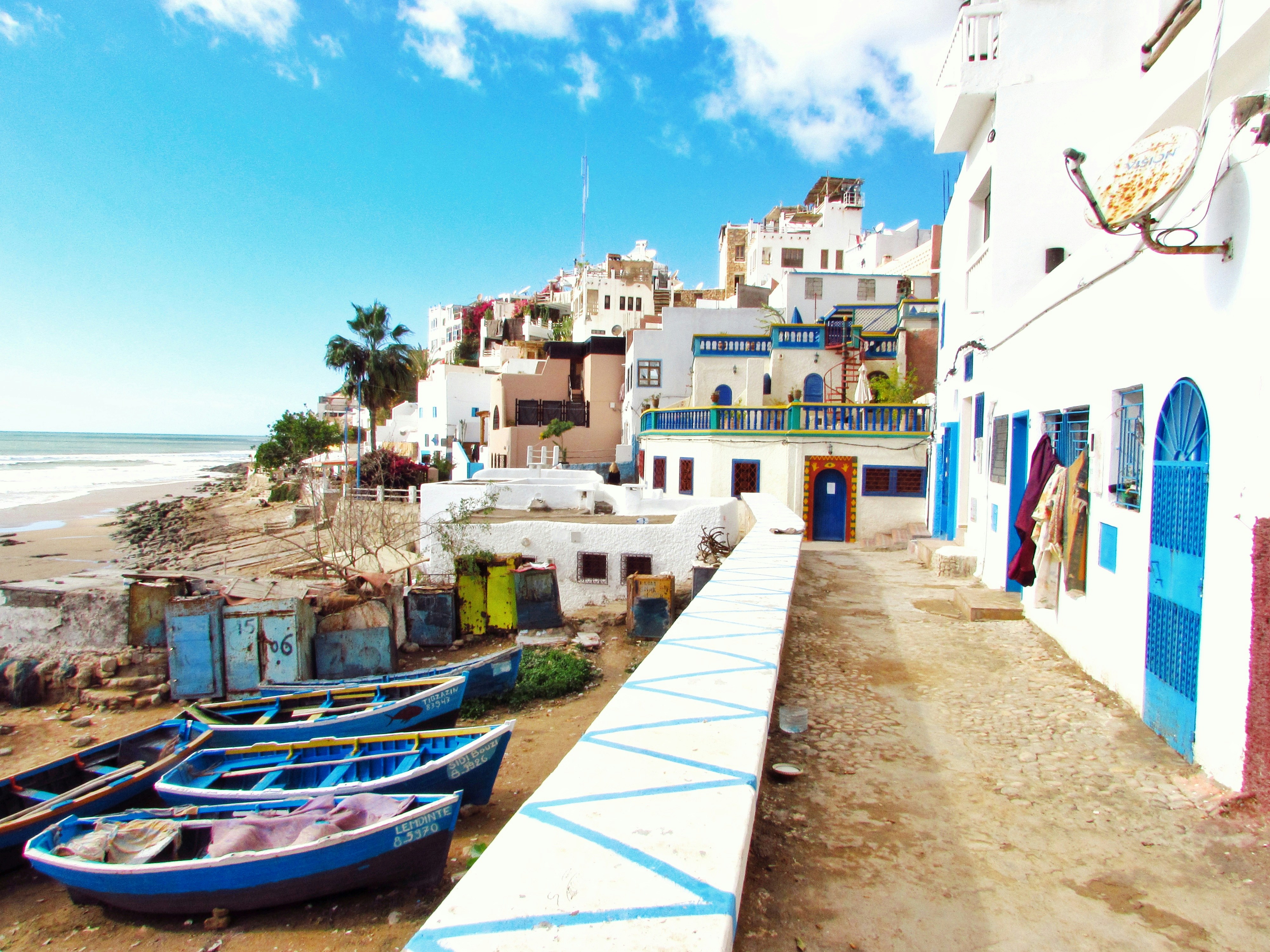
Essaouira is a fortified Atlantic port city in Morocco, built within 18th-century sea ramparts and known for near-constant coastal wind that has made it one of the country’s main windsurfing and kitesurfing destinations. Its blue-and-white medina, working fishing port, and relaxed pace set it apart from Morocco’s larger, more crowded imperial cities, and its distance from Marrakech makes it one of the most popular coastal day trips or short overnight stays in the region. The town’s low-rise skyline and blue shutters give it a distinctly different visual character from Morocco’s red-walled inland cities.
The Ramparts and Medina
Essaouira’s medina sits inside 18th-century sea walls, built under Sultan Mohammed III with the help of a French military engineer, giving the fortifications a somewhat different layout than the older medinas of Fes or Marrakech. The ramparts along the waterfront, known locally as the Skala de la Ville, are lined with old cannons and remain walkable, offering views out over the Atlantic and the town’s fishing port below. Inside the walls, the medina is a UNESCO World Heritage Site, with a grid of streets that is generally easier to navigate than the tangled alleys of Fes.
Windsurfing and Kitesurfing
Essaouira’s near-constant trade wind, locally nicknamed the Alizee, has made it one of North Africa’s established windsurfing and kitesurfing destinations, with conditions considered reliable for much of the year. Several schools along the beach offer lessons and equipment rental, and the town draws a steady stream of wind-sport travelers alongside its more general tourist visitors, giving Essaouira a slightly different crowd than Morocco’s other coastal towns.
The Fishing Port
Essaouira’s working fishing port remains active, with blue wooden boats bringing in a daily catch sold at a small market near the port gate. Fresh fish and seafood are grilled at stalls close to the water, a popular stop for visitors, and the port itself is one of the more photographed working harbors in Morocco given its setting against the ramparts and medina walls.
Argan Oil and the Souks
The region around Essaouira is part of Morocco’s argan-producing area, and shops throughout the medina sell argan oil and related cosmetic and culinary products, some produced by women’s cooperatives in the surrounding countryside. The souks also carry thuya wood carving, a craft particular to this part of Morocco, alongside the usual range of textiles, leather goods, and jewelry found across the country’s markets.
Food in Essaouira
Seafood dominates Essaouira’s food scene, unsurprisingly given its working port, with fresh grilled fish available both at simple port-side stalls and more formal restaurants around the medina. The town’s food scene has also developed a reputation for a wider international range than many smaller Moroccan towns, reflecting decades of foreign visitors and a resident expatriate community.
A Brief History of Essaouira
The site has been used as a port for centuries, with Phoenician and later Portuguese traders present before Sultan Mohammed III rebuilt it as a planned fortified city in the 18th century, originally named Mogador. The city was designed partly to redirect international trade away from other Moroccan ports, and its European-influenced layout and fortifications set it apart from cities that grew more organically. Essaouira also had a historically significant Jewish merchant community, whose presence shaped the city’s trading economy for generations before most emigrated in the 20th century.
Where to Stay
Accommodation in Essaouira ranges from simple guesthouses within the medina to riads converted from old merchant houses, many built around interior courtyards typical of Moroccan architecture. Properties directly on or near the ramparts often command a premium for their sea views, while options slightly further into the medina are generally quieter and less expensive. A smaller cluster of hotels sits along the beach south of the medina, closer to the windsurfing launch points.
Common Misconceptions
A common assumption is that Essaouira’s beach is a warm, calm swimming beach similar to those further south near Agadir. In practice, the water is cooler and the wind and currents are often strong, which is precisely why the town became a windsurfing hub rather than a swimming resort. Another misconception is that Essaouira is a small village. It is a functioning city with a real fishing economy and a resident population well beyond what its compact, walkable medina might suggest.
Best Time to Visit
Spring and autumn generally offer a more comfortable balance of wind and temperature for travelers who want to explore the medina without being fully committed to water sports. Summer brings the strongest and most reliable wind, appealing to windsurfers and kitesurfers but sometimes uncomfortable for casual beach time. Winter is quieter and cooler, with a real Atlantic chill that catches some visitors expecting typical Moroccan warmth off guard.
Practical Tips for Visiting
The near-constant wind means a light jacket is worth packing even in warmer months, since the coastal breeze can make evenings cooler than inland Morocco. The medina’s grid layout makes it one of the more straightforward Moroccan old towns to navigate on foot, though the winding side streets near the port still reward a general sense of direction. Sunset from the ramparts or the port breakwater is a popular daily ritual worth timing a visit around, and the light at that hour is a large part of why photographers return to the same spots repeatedly.
Getting to Essaouira
Essaouira is roughly 190 km west of Marrakech, approximately 2.5 to 3 hours of driving, making it one of the most accessible coastal day trips from the city. Essaouira also has a small airport with limited seasonal international connections, though most travelers arrive overland from Marrakech by car, bus, or organized transport. There is no direct rail connection, so road travel remains the standard route. Shared and private grand taxis also run between Essaouira and Marrakech for travelers without their own transport.
Day Trips from Essaouira
The area around Essaouira offers several worthwhile side trips for travelers with a car or a guide. Small argan cooperatives dot the countryside inland, many open for visits and demonstrations of the traditional oil-extraction process. Diabat, a small village south of town, is known among some travelers for its ruined palace and windswept dunes, a quieter alternative to the busier main beach closer to the medina.
Essaouira and the Arts
Essaouira has a long-standing reputation as a gathering point for musicians and artists, reinforced by the annual Gnaoua World Music Festival, which draws performers and visitors from across Morocco and abroad each June. This cultural association dates back decades, with the town’s relaxed atmosphere and coastal light having drawn painters, musicians, and writers well before the festival itself began. Galleries around the medina still reflect this history, showing local and visiting artists’ work alongside the more commercial craft shops.
How Essaouira Fits Into a Wider Morocco Trip
Essaouira works well as a coastal counterpart to a Marrakech-based itinerary, offering a different pace and climate within a manageable drive. It is also sometimes combined with a longer Atlantic coastal route connecting Casablanca, El Jadida, and Oualidia further north, or paired with time in Agadir and Taghazout further south for travelers building a broader coastal itinerary rather than sticking to the classic desert route.
Shopping in the Souks
Essaouira’s souks are generally considered more relaxed than those of Marrakech or Fes, with less aggressive bargaining pressure and a browsing atmosphere that many first-time visitors find easier to navigate. Woodwork made from thuya, a local tree species, is a signature craft here, alongside the argan products, textiles, and jewelry found throughout Morocco’s markets. Prices in Essaouira are frequently noted as somewhat more fixed and transparent than in the country’s larger tourist centers, though bargaining still applies in most stalls.
Frequently Asked Questions
What is Essaouira known for?
Essaouira is known for its fortified 18th-century medina and sea ramparts, a working fishing port, strong Atlantic winds that draw windsurfers and kitesurfers, and a history as a former Portuguese and later international trading post.
How far is Essaouira from Marrakech?
Essaouira is roughly 190 km west of Marrakech, approximately 2.5 to 3 hours of driving.
Why is Essaouira so windy?
Essaouira sits directly on the Atlantic coast where a persistent trade wind, locally nicknamed the Alizee, blows through much of the year, which is also why the town has become a center for windsurfing and kitesurfing.
Is Essaouira a good day trip from Marrakech?
Yes, Essaouira is a common day trip from Marrakech given the roughly 2.5 to 3 hour drive, though many travelers prefer at least one overnight to experience the town outside the busiest midday hours.
Was Essaouira used as a filming location?
Yes, Essaouira’s ramparts and coastal scenery have been used in several international film and television productions, including scenes for Game of Thrones.
Can you swim at Essaouira’s beach?
Swimming is possible but the water is generally cooler than Morocco’s southern beaches and the wind and currents can be strong, so the beach is more associated with windsurfing and kitesurfing than casual swimming.
Browse our Marrakech desert tours for the inland desert route, or see our full range of Marrakech tours if you’re planning a wider Morocco itinerary.