
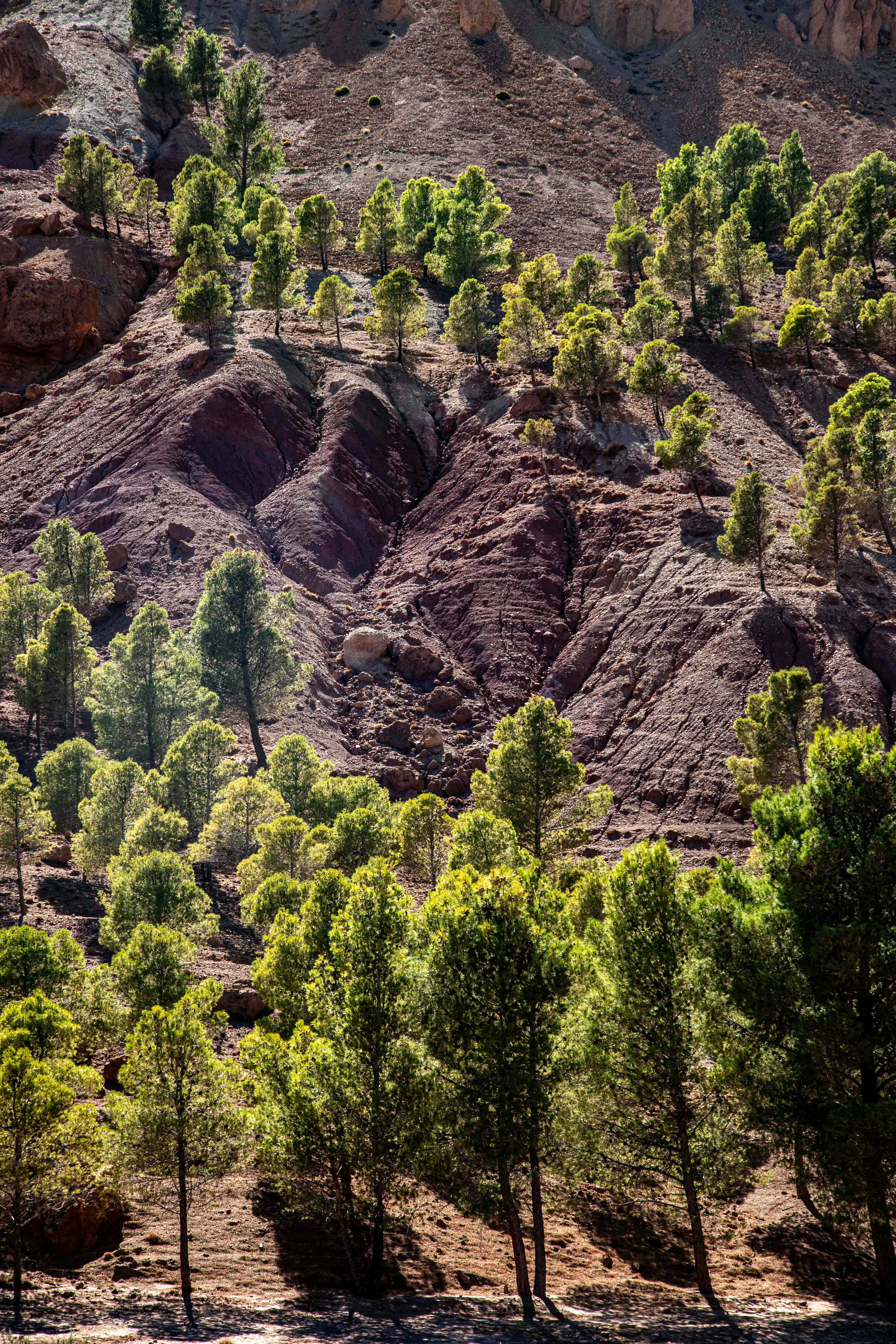
Ifrane is a small town in Morocco’s Middle Atlas mountains, built in a distinctly European architectural style during the French colonial period and known today for its cedar forests, cooler climate, and occasional snow, features that have earned it the nickname “Switzerland of Morocco.” The town’s steep-roofed stone buildings and manicured public gardens stand apart from the flat-roofed medinas found across most of the country, and its location between Fes and the desert routes further south makes it a natural stop for travelers exploring Morocco’s mountain regions.
Alpine-Style Architecture
Ifrane was largely built by the French in the 1930s as a hill station retreat from the summer heat of the lowland cities, and the town’s architecture reflects that origin directly, with steep red-tiled roofs, stone facades, and chalet-style buildings that would look at home in the Alps. This layout sets Ifrane apart from virtually every other Moroccan town, where flat roofs and courtyard-style medina architecture are the norm, and the contrast is part of what draws curious visitors passing through the Middle Atlas.
The Cedar Forests
Ifrane sits within a broader belt of Middle Atlas cedar forest, among the largest cedar forest areas in North Africa, with trees that can reach considerable age and height. The forest supports a cooler, greener landscape than most visitors associate with Morocco, and stands of cedar extend from around Ifrane toward the nearby town of Azrou, forming a corridor that is as much a draw for the region as any single monument.
Al Akhawayn University
Al Akhawayn University, founded in the early 1990s, is an English-language university modeled loosely on American liberal arts institutions, and its campus is one of Ifrane’s defining features. The university has shaped the town’s character considerably, bringing a younger, more international population to a place that would otherwise be a quiet mountain retreat, and its distinctive modern campus architecture is worth a look even for visitors with no academic connection to the school.
Snow and a Mountain Climate
Ifrane’s elevation in the Middle Atlas gives it a climate unlike almost anywhere else in Morocco, with regular winter snow and temperatures that can drop well below what most travelers expect from the country. A small ski area operates nearby at Michlifen during the winter season, drawing a modest but steady stream of domestic skiers, and the surrounding forest takes on a genuinely wintry look during the colder months that surprises visitors arriving from Marrakech or the coast.
The Lion of Ifrane
A large stone lion statue, carved in the 1930s, sits in the center of town and has become one of Ifrane’s best-known landmarks. The statue is popularly associated with the Barbary lion, a subspecies once native to the Atlas Mountains and now extinct in the wild, and it serves as a common meeting point and photo stop for visitors passing through the town center.
Azrou and the Barbary Macaques
The town of Azrou, roughly 17 km from Ifrane, sits at the edge of a cedar forest that is one of the more reliable places in Morocco to see wild Barbary macaques, a monkey species native to the Atlas Mountains and the Rif. Troops of macaques are often visible near the roadside within the forest, and the short drive from Ifrane makes Azrou a natural add-on for travelers interested in the region’s wildlife rather than only its architecture.
Food in Ifrane
Ifrane’s food scene reflects its cooler climate and university population, with a mix of standard Moroccan restaurants serving tagine and grilled meats alongside cafes catering to students and academic visitors. The town’s dining options are generally simpler and less tourist-oriented than in Fes or Marrakech, reflecting its smaller size and different visitor base.
A Brief History of Ifrane
Before the French developed it as a hill station in the 1930s, the area around Ifrane was sparsely settled, valued mainly for its forests and water sources rather than as a population center. French colonial administrators built Ifrane specifically as a retreat from the summer heat of cities like Fes and Meknes, choosing the Alpine-style architecture deliberately to evoke a European mountain town. After independence, Ifrane’s role shifted gradually from a colonial retreat toward a domestic destination for Moroccans seeking cooler weather, and the founding of Al Akhawayn University in the 1990s added an academic dimension that continues to shape the town today.
Where to Stay
Accommodation in Ifrane ranges from simple guesthouses to larger hotels built to accommodate both tourists and visitors connected to the university, generally at more moderate prices than equivalent options in Fes or Marrakech. Winter weekends, particularly during snow season, tend to see higher demand from domestic travelers, so booking ahead matters more during those periods than in the quieter shoulder seasons.
Common Misconceptions
A common assumption is that Ifrane looks and feels like the rest of Morocco with only slightly cooler weather. In practice, its Alpine-style architecture and forested surroundings make it visually distinct from nearly every other town in the country, closer in appearance to a European mountain village than a Moroccan one. Another misconception is that snow in Morocco is unusual to the point of being a novelty confined to the High Atlas peaks. Ifrane and the surrounding Middle Atlas see regular winter snow at a much lower, more accessible elevation than the high mountain passes further south.
Best Time to Visit
Summer offers the most comfortable temperatures relative to the rest of Morocco, making Ifrane a popular escape from the heat in cities like Fes and Marrakech during the hottest months. Winter brings snow and a genuinely cold mountain climate, appealing to visitors interested in that contrast or in the small Michlifen ski area nearby. Spring and autumn are quieter, with milder temperatures suited to walking the forest and town without the crowds of peak summer or the cold of deep winter.
Practical Tips for Visiting
Warm clothing is worth packing even outside winter, since Ifrane’s mountain elevation keeps evenings noticeably cooler than lowland Morocco throughout the year. The town itself is small and easily covered on foot in a couple of hours, with the lion statue and central gardens as natural anchor points for a short walk. Travelers interested in the Barbary macaques near Azrou should keep a respectful distance and avoid feeding the animals, both for safety and for the animals’ own wellbeing.
Getting to Ifrane
Ifrane is roughly 65 km south of Fes, approximately 1 hour of driving through the Middle Atlas foothills, making it a straightforward half-day or full-day trip from the city. From Marrakech, Ifrane is roughly 440 km, approximately 6 hours of driving, typically routed through Beni Mellal and Khenifra. There is no rail connection directly to Ifrane, so travelers generally arrive by car, taxi, or organized transport from Fes or Meknes.
How Ifrane Fits Into a Wider Morocco Trip
Ifrane works well as a mountain stop on a route connecting Fes with the Middle Atlas and, further south, the desert routes toward Merzouga, offering a cooler, forested contrast to both the imperial cities and the Sahara. It generally suits travelers building an itinerary that crosses the Middle Atlas overland rather than those flying directly between fixed points, since its appeal lies largely in the drive through cedar forest and mountain scenery rather than in a single standalone attraction.
Hiking and Outdoor Activities
The forested terrain around Ifrane makes it one of the more walkable landscapes in Morocco, with trails through the cedar forest suited to casual hikes rather than the technical mountaineering associated with the High Atlas further south. Several small lakes dot the wider region, including Dayet Aoua, a seasonal lake that draws birdwatchers and picnicking families, particularly in spring when water levels are higher. The combination of forest, lakes, and mild elevation gives Ifrane a different kind of outdoor appeal than Morocco’s desert or coastal destinations, closer to a temperate mountain retreat than to the country’s more familiar landscapes.
Frequently Asked Questions
Why is Ifrane called the Switzerland of Morocco?
Ifrane earned the nickname for its Alpine-style architecture, steep red-tiled roofs, cedar forest surroundings, and cooler mountain climate that includes occasional snow in winter, all unusual for Morocco.
How far is Ifrane from Fes?
Ifrane is roughly 65 km south of Fes, approximately 1 hour of driving through the Middle Atlas foothills.
Does it snow in Ifrane?
Yes, Ifrane sits at a relatively high elevation in the Middle Atlas and regularly sees snow in winter, making it one of the few places in Morocco with a genuine snow season.
What is Al Akhawayn University?
Al Akhawayn University is an English-language university in Ifrane founded in the early 1990s, known for its American-style liberal arts curriculum and distinctive campus architecture.
Can you see the Barbary macaques near Ifrane?
Yes, the cedar forest around Azrou, roughly 17 km from Ifrane, is one of the more reliable places in Morocco to see wild Barbary macaques.
Is Ifrane worth visiting?
Ifrane suits travelers interested in Morocco’s mountain scenery and cooler climate, offering a distinctly different character from the country’s coastal cities and desert routes.
Browse our Marrakech desert tours for the inland desert route, or see our full range of Marrakech tours if you’re planning a wider Morocco itinerary.