
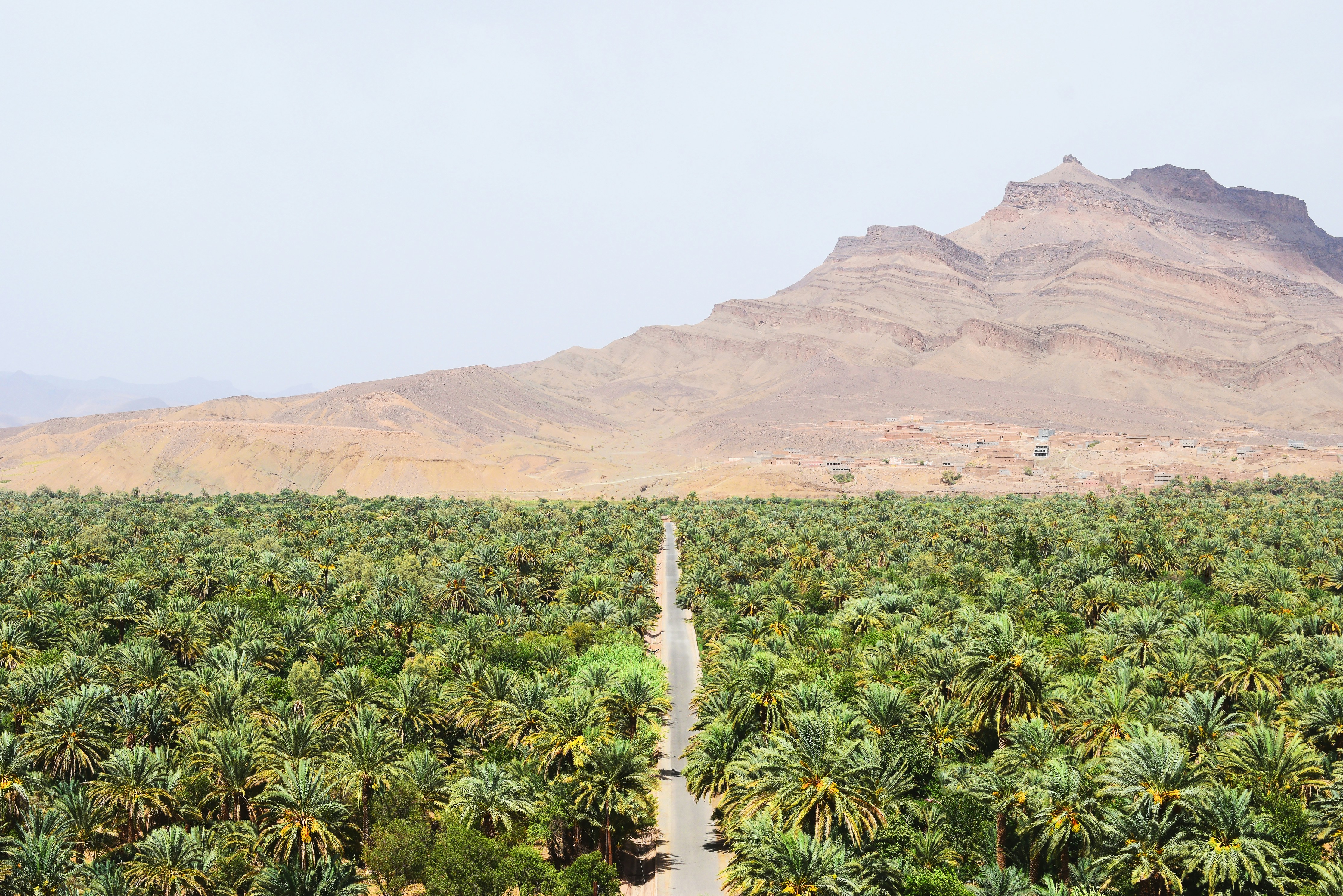
Zagora is a small desert town in southeastern Morocco, sitting at the far end of the Draa Valley where the palm groves and kasbah villages that line Morocco’s longest river finally give way to open desert. It has long served as a gateway town, first for camel caravans heading toward West Africa and now for travelers heading into the Erg Chegaga dune field on a multi-day desert route from Marrakech.
The Draa Valley Route
The road to Zagora from Marrakech runs first over the Tizi n’Tichka pass through the High Atlas, then down through Ouarzazate before following the Draa River south. This stretch, known as the Draa Valley, is lined for well over 100 km with palm groves, fortified kasbahs, and small farming villages built directly against the riverbank, a green corridor running through otherwise dry, rocky terrain. Many travelers consider this drive along the valley one of the most scenic parts of the entire route to the desert, distinct from the more austere landscape further east toward Merzouga.
The “52 Days to Timbuktu” Sign
On the edge of town stands a weathered sign reading “Tombouctou 52 jours”, a reference to the roughly 52-day camel caravan journey that once connected Zagora to Timbuktu across the Sahara. This trade route carried salt, gold, and goods between North and West Africa for centuries, and Zagora’s position at the last reliable water and palm groves before the open desert made it a natural staging point for caravans heading south. The sign has become one of the most photographed spots in town, a physical marker of a trade history that shaped the region long before tourism arrived.
Palm Groves and Kasbah Villages
Zagora itself sits within a dense palm grove watered by the Draa River, and the surrounding villages are built from rammed earth in the same kasbah style found throughout the valley, with high defensive walls and corner towers that once protected stored grain and dates from raiders. Walking or driving through these villages gives a close look at a farming way of life that has continued largely unchanged for generations, organized around date palms, small irrigated plots, and the seasonal rhythm of the river.
Camel Treks to Erg Chegaga
Zagora is the main departure point for camel treks into Erg Chegaga, a dune field roughly 55 to 60 km further into the desert by rough track, reached either directly by camel over one or more days or by a combination of a 4×4 transfer partway followed by a shorter camel ride into the dunes themselves. Erg Chegaga is less visited than the better-known Erg Chebbi dunes near Merzouga, and camps here tend to be smaller and more spread out, appealing to travelers looking for a quieter desert experience with fewer other groups nearby.
Erg Chegaga Compared to Erg Chebbi
Travelers planning a desert leg of a Morocco trip often have to choose between the Zagora-Erg Chegaga route and the more established Merzouga-Erg Chebbi route further east. Erg Chebbi’s dunes are generally taller and more famous, with a larger, more developed camp infrastructure and easier access by paved road most of the way. Erg Chegaga requires more off-road travel to reach and has fewer camps, but this same difficulty means smaller groups and a quieter, less commercialized desert stay for travelers willing to accept the longer, rougher approach.
Food in Zagora
Meals in Zagora lean toward simple, hearty Moroccan staples suited to travelers passing through on a desert route, with tagine, couscous, and grilled meat forming the backbone of most menus in town and at the desert camps beyond it. Dates grown in the surrounding palm groves are a local specialty, sold fresh or dried at small stalls and often served alongside mint tea as a welcome gesture at guesthouses. Desert camps typically serve communal dinners cooked over a fire, a straightforward but memorable part of the overnight camel trek experience.
The Amazigh Communities of the Valley
The Draa Valley has long been home to Amazigh, or Berber, communities who farm the irrigated land along the river and maintain the kasbah villages that line the route to Zagora. Many of the guides and camel handlers who lead treks into Erg Chegaga come from these same valley communities, with knowledge of the desert routes passed down through generations of families who have worked this stretch of land and desert edge for a long time. Village life here still follows the rhythm of the palm harvest and the river’s water more closely than the tourism calendar.
The Town of Zagora
Zagora itself is a modest provincial town rather than a major tourist destination in its own right, with a small central market, basic guesthouses, and a handful of restaurants serving travelers passing through on the way to or from the desert. Most visitors treat the town as a stopover rather than a destination, spending a night here before or after the camel trek portion of their trip rather than lingering for multiple days.
Where to Stay
Accommodation in and around Zagora ranges from simple guesthouses in town to riad-style properties set within the surrounding palm groves, generally quieter and more scenic than staying directly in the town center. Desert camps further out near Erg Chegaga offer tented overnight stays as part of a camel trek package, ranging from simple shared camps to more comfortable private tents with proper beds rather than mats.
Common Misconceptions
A common assumption is that Zagora sits right at the edge of tall Saharan dunes. In practice, the town itself is surrounded by palm groves and flat, rocky desert, and reaching the actual dune field at Erg Chegaga requires a further drive or camel ride of roughly an hour or more. Another misconception is that the Zagora route is a shorter or easier alternative to Merzouga. The drive to Zagora is comparable in length to the Merzouga route, and the final stretch into Erg Chegaga itself is rougher and less predictable than the paved approach to Erg Chebbi.
Best Time to Visit
Spring and autumn bring the most comfortable temperatures for both the drive down the Draa Valley and time in the desert, avoiding the extreme summer heat that can make daytime travel through this region difficult. Winter days are generally pleasant, though desert nights can be cold enough to require warm layers even with a heated or well-equipped camp. Summer is the least comfortable season here, with daytime temperatures in the valley and desert regularly reaching levels that limit outdoor activity to the early morning and evening.
Practical Tips for Visiting
Sun protection matters more here than in most parts of Morocco, given the near-constant desert sun and the lack of shade once away from the palm groves, so a hat, sunscreen, and plenty of water are worth carrying even for a short walk around town. Nights in the desert camps can turn cold quickly, particularly outside summer, so packing a warm layer alongside lighter daytime clothing avoids being caught out after sunset. Cash is more reliable than cards in Zagora itself and especially at the desert camps further out, where ATMs and card machines are not always available.
Getting to Zagora
Zagora is roughly 360 km from Marrakech, approximately 6 to 7 hours of driving over the Tizi n’Tichka pass and down through Ouarzazate and the Draa Valley. Most travelers cover this as part of a multi-day desert tour rather than a direct one-way drive, breaking the journey with a stop in Ouarzazate on the way down. Zagora also has a small regional airport with limited domestic connections, though the vast majority of visitors arrive by road as part of an organized desert route.
How Zagora Fits Into a Wider Morocco Trip
Zagora works as one possible desert route out of Marrakech, generally chosen over the Merzouga route by travelers prioritizing a quieter, less-visited dune field and a scenic drive down the full length of the Draa Valley over the taller, more famous dunes and easier access further east. Many multi-day tours combine a night in Ouarzazate, a night in or near Zagora, and a camel trek overnight in the desert before returning to Marrakech, though the route can also be extended or combined with the Merzouga side for a longer loop.
Frequently Asked Questions
How far is Zagora from Marrakech?
Zagora is roughly 360 km from Marrakech, approximately 6 to 7 hours of driving over the Tizi n’Tichka pass through Ouarzazate.
What does the sign in Zagora mean?
A well-known sign near town reads “52 days to Timbuktu by camel”, a reference to the historic caravan trade route that once passed through Zagora toward West Africa.
Can you see sand dunes from Zagora?
Zagora itself sits in the Draa Valley among palm groves rather than dunes, but it is the main departure point for camel treks into the Erg Chegaga dunes roughly 55 to 60 km further into the desert.
Is Zagora the same as Merzouga?
No, Zagora and Merzouga are reached by different desert routes from Marrakech and lead to different dune fields, Erg Chegaga near Zagora and Erg Chebbi near Merzouga.
What is the Draa Valley?
The Draa Valley is a long, fertile corridor of palm groves and kasbah villages that follows Morocco’s longest river south from Ouarzazate through Zagora toward the desert.
How long does a camel trek from Zagora take?
Camel treks from Zagora toward Erg Chegaga typically run from one overnight trip to multi-day treks of three or more days, depending on how deep into the dunes travelers want to go.
Browse our Marrakech desert tours for organized routes through the Draa Valley, or see our full range of Marrakech tours if you’re planning a wider Morocco itinerary.