
People ask us all the time whether Morocco is worth visiting. Our honest answer: it is one of the most rewarding countries on earth to travel through, and 2026 is a particularly good year to go. Here is why.
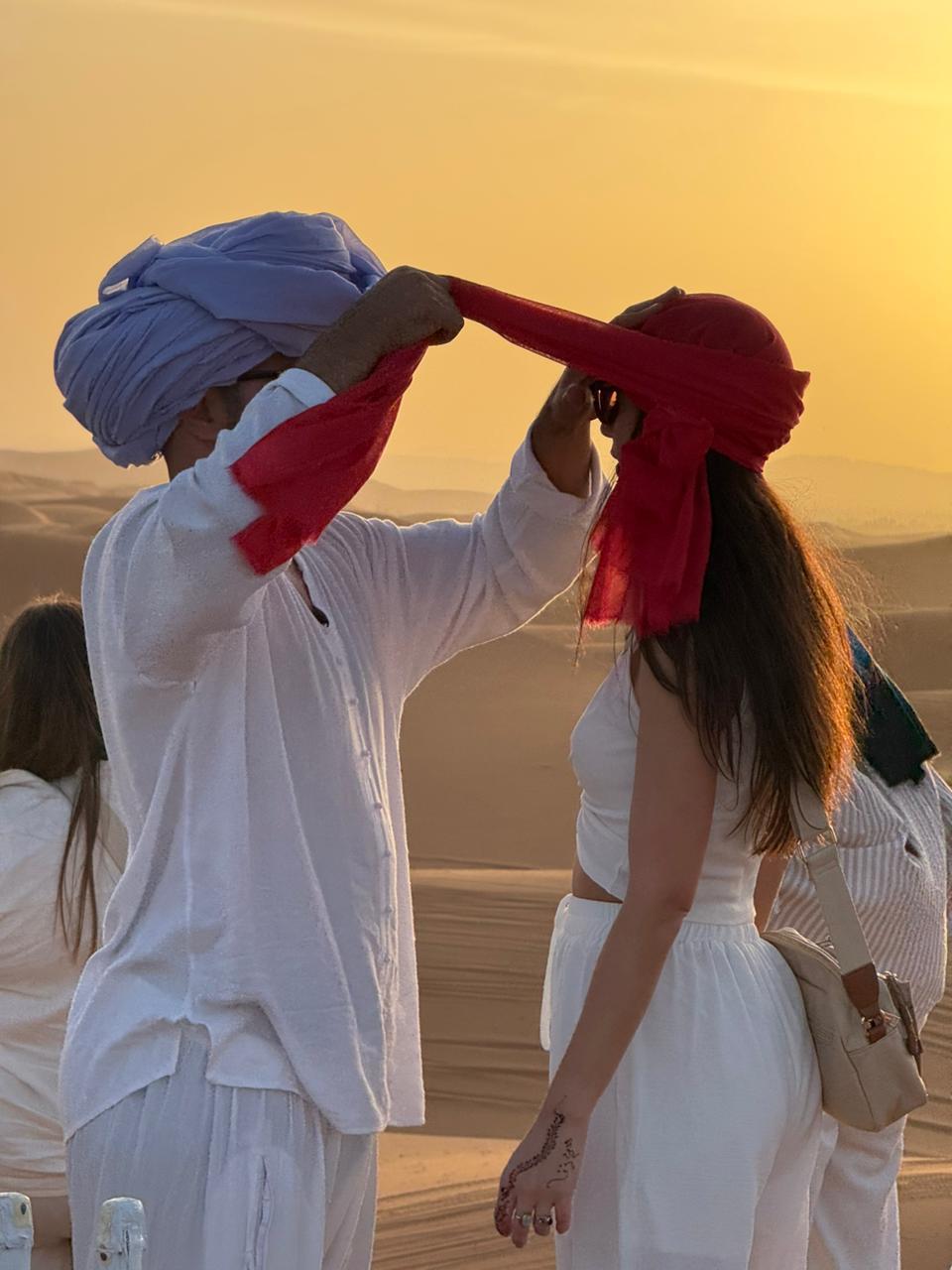
Our guests in the Sahara desert, Erg Chebbi, Morocco.
The Sahara is unlike anywhere else on earth
There is no adequate way to prepare someone for their first night in the Sahara. The silence is total. The sky is full of stars in a way that most people have never seen before. The dunes change colour from gold to deep orange to red as the light shifts throughout the day, and waking up before sunrise to watch the desert come alive is something that stays with people for years.
The Erg Chebbi dune field near Merzouga is the heart of the Moroccan Sahara, and it is exactly as spectacular as the photographs suggest. Our 3-day Marrakech to Merzouga tour is the most popular way to experience it, though if you have a little more time, the 5-day version gives you two nights in the desert and a much more complete experience.
The imperial cities are genuinely world-class
Morocco has four imperial cities, each with its own character and history. Marrakech is the most visited, and for good reason: the medina is a maze of souks, palaces, and riads that could absorb days of exploration. Fes is older and quieter, home to the world’s oldest university and a medina so dense that cars are banned entirely. Meknes is often overlooked, which makes it all the more enjoyable. Rabat, the capital, balances history with a calmer, more contemporary pace.
What makes these cities special is not just the architecture but the way ordinary life continues inside them. The medinas are not preserved for tourists; they are working, living neighbourhoods, and that is what makes exploring them feel so alive.
The landscapes are enormously varied
Most people arrive expecting sand dunes and leave having also seen snowcapped mountains, ancient gorges, fertile valleys, cedar forests, and Atlantic coastline. Morocco packs an extraordinary range of landscapes into a relatively compact country, and the drives between cities are some of the most scenic in the world.
The High Atlas mountains cross the country from east to west and are crossed on almost every itinerary we run. The Todra Gorge is one of the most dramatic natural formations in Africa. The Dades Valley is so beautiful it is sometimes called the Valley of a Thousand Kasbahs. These are not detours; they are the journey itself.
The food is seriously good
Moroccan cuisine is one of the great underappreciated food cultures in the world. Tagines slow-cooked over charcoal. Couscous on Fridays. Pastilla, a sweet and savoury pastry that has no equivalent anywhere else. Fresh-baked bread with argan oil and honey at breakfast. Street food in Marrakech’s Djemaa el-Fna that runs until midnight. Mint tea poured from a height so that it foams in the glass.
Eating well in Morocco requires almost no effort. The food is everywhere, the ingredients are fresh, and even a basic roadside restaurant will usually serve something memorable. Part of what we enjoy most about guiding tours is watching people encounter Moroccan cooking for the first time.
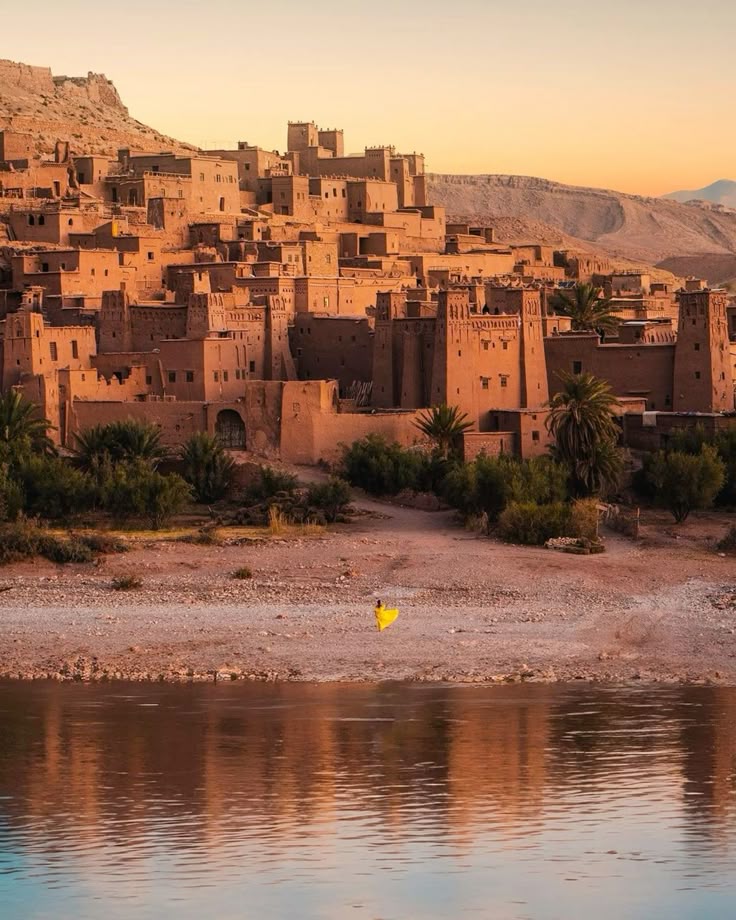
The road from Marrakech toward the Sahara, passing through the High Atlas and the Draa Valley.
It is one of the most accessible countries in Africa
Morocco shares no land border with the Schengen Area, but it is well connected by air from most major European and North American cities. Flights from London, Paris, Madrid, and Amsterdam to Marrakech or Casablanca are frequent and reasonably priced. The country requires no visa for most Western passport holders. Roads are good, accommodation is plentiful across every price range, and the infrastructure for tourism is well developed without feeling overly commercialised.
For travellers based in Europe especially, Morocco is one of the closest genuinely different travel experiences available. The flight from London to Marrakech takes around three hours and yet everything on the ground feels completely removed from Europe.
Chefchaouen and the north are finally getting the attention they deserve
Chefchaouen, the blue city in the Rif Mountains, has become one of the most photographed places in the world over the past few years, and for good reason. The streets really are that blue. The setting in the mountains is stunning. The pace of life is slower than Marrakech or Fes, and many travellers find it the most pleasant place they visit in the country.
The northern route is a natural extension for anyone travelling between Marrakech and Tangier, and our 6-day Marrakech to Tangier tour brings in both Chefchaouen and the Sahara in a single itinerary. For a longer exploration of the whole country, the 10-day Casablanca to Marrakech tour covers the north, the desert, and the south in one continuous journey.
The people make it
This is the one that surprises travellers the most, particularly those who have read cautionary travel advice beforehand. Moroccan hospitality is not a cliche. It is a genuine cultural value that shapes the way people interact with guests, whether they are paying customers or strangers who have stopped to ask for directions.
We have been running tours for years, and the feedback we hear most consistently from guests is some version of the same thing: the people were even warmer than expected. The interactions in the souks, the conversations over tea, the guides who went far beyond the script. That generosity of spirit is something that is very hard to find everywhere, and Morocco has it in abundance.
“Every itinerary we offer has been personally driven, refined, and approved by our team. When you travel with us, you are our guests.”
About Pro Morocco ToursThere is a route for every type of traveller
Morocco works for solo travellers, couples, families, groups of friends, and senior travellers. It works for people who want to be in cities and for people who want to be in the desert. It works for those on a tight budget and for those who want to stay in exceptional riads and private desert camps. The country is large enough and varied enough to accommodate almost any kind of trip.
For those starting from Casablanca, our 4-day itinerary, 8-day tour, and 9-day route each offer a different depth of experience depending on how much time is available. For those beginning in Marrakech, the 4-day Merzouga tour and the 3-day route to Fes via the Sahara are two of our most booked itineraries. Whatever the starting point, we can build something that fits.
The history goes extraordinarily deep
Morocco has been continuously inhabited for tens of thousands of years, and the layers of that history are visible everywhere you look. Volubilis, the ancient Roman city near Meknes, is one of the best-preserved Roman sites in Africa and is far less crowded than its equivalents in Italy or Tunisia. Ait Ben Haddou, the UNESCO-listed ksar near Ouarzazate, has appeared in more films than almost any location on earth. The medina of Fes contains a university, Al-Qarawiyyin, that has been operating continuously since 859 AD.
You do not need to approach Morocco as a history lesson to appreciate this. But knowing that almost every building, road, and neighbourhood you pass through has a story that goes back centuries does change the quality of attention you bring to what you are seeing.
2026 is a particularly good year to go
Morocco is co-hosting the 2030 FIFA World Cup alongside Spain and Portugal, which has accelerated significant investment in infrastructure across the country. New roads, improved airports, expanded hotel capacity, and upgraded transport links are already visible across the country, and the pace of development is expected to continue through the rest of the decade.
Visiting in 2026 means benefiting from much of that improved infrastructure while the country still feels like itself. Before the scale of attention that a World Cup brings changes the atmosphere of the major cities, now is an excellent time to travel. The Morocco that exists today is both more accessible than it has ever been and still deeply, recognisably itself.
None of these reasons require you to have any prior connection to Morocco or any particular interest in North African culture. The country earns its place on any travel list purely on its own terms: the landscape, the food, the history, the people, and the sheer variety of what is on offer within a relatively small area.
If you are thinking about going, 2026 is a genuinely good year to do it. We would be glad to help you plan a trip that makes the most of your time there, whether that is three days or ten. You can get in touch with our team here, or browse our full range of itineraries on the Pro Morocco Tours website.