
Most people who visit Morocco see Marrakech, the Sahara, and perhaps Fes. All three are worth every bit of the attention they receive. But Morocco is a much larger and more varied country than its most famous destinations suggest, and some of its most extraordinary places are barely known outside the people who grew up near them. These are ten of our favourites.

Morocco rewards travellers who are willing to go a little further from the well-worn routes.
Boutaghrar — the village the valley forgot
Tucked into the upper reaches of the Dades Valley, Boutaghrar is the kind of place that feels genuinely undiscovered. The village sits among extraordinary rock formations and terracotta-coloured cliffs that shift colour throughout the day as the light changes. Most tourists who drive through the Dades stop at the famous curves lower down the valley and turn back. Those who continue to Boutaghrar find something far quieter and more beautiful.
The surrounding landscape is dramatic in a way that is difficult to photograph accurately. Walking the trails above the village at sunrise, with the valley below still in shadow, is one of the more memorable experiences available in southern Morocco.
Local tipStay at a family-run guesthouse in the village rather than the larger hotels further down the valley. The difference in atmosphere is significant.
Paradise Valley — the waterfall oasis near Agadir
Most people associate Agadir with beach resorts and package holidays. What they do not know is that roughly 45 minutes inland, tucked into the foothills of the Anti-Atlas mountains, lies one of the most beautiful natural spots in Morocco. Paradise Valley is a lush palm-filled gorge with a series of natural pools and small waterfalls fed by mountain streams. The contrast with the dry landscape surrounding it is startling.
It is popular with locals on weekends but remains largely unknown to international tourists. The walk through the gorge is not strenuous, the swimming is genuinely refreshing, and the whole place has a quality of discovered-by-accident that is rare this close to a major resort city.
Local tipGo on a weekday morning. By midday on Fridays and Saturdays the pools fill with local families, which is wonderful but a different experience entirely.
Village Aghroud — a Saharan village unchanged by time
Not far from Merzouga and the Erg Chebbi dunes, the small village of Aghroud sits at the edge of the desert in a way that most of the more visited Saharan settlements no longer do. It has not been shaped around tourism. The mudbrick architecture is original, the pace of life is unhurried, and the relationship between the village and the surrounding desert feels genuinely ancient rather than curated.
Visiting Aghroud as part of a desert itinerary rather than going directly to the main dune camps gives you something that stays with you longer: a sense of what life at the edge of the Sahara has always looked and felt like. It is the kind of stop that quietly becomes the thing people remember most from the whole trip.
Local tipAsk your guide to arrange a mint tea stop with a local family if possible. These interactions, when they happen naturally and without pressure, are among the most genuine Morocco has to offer.
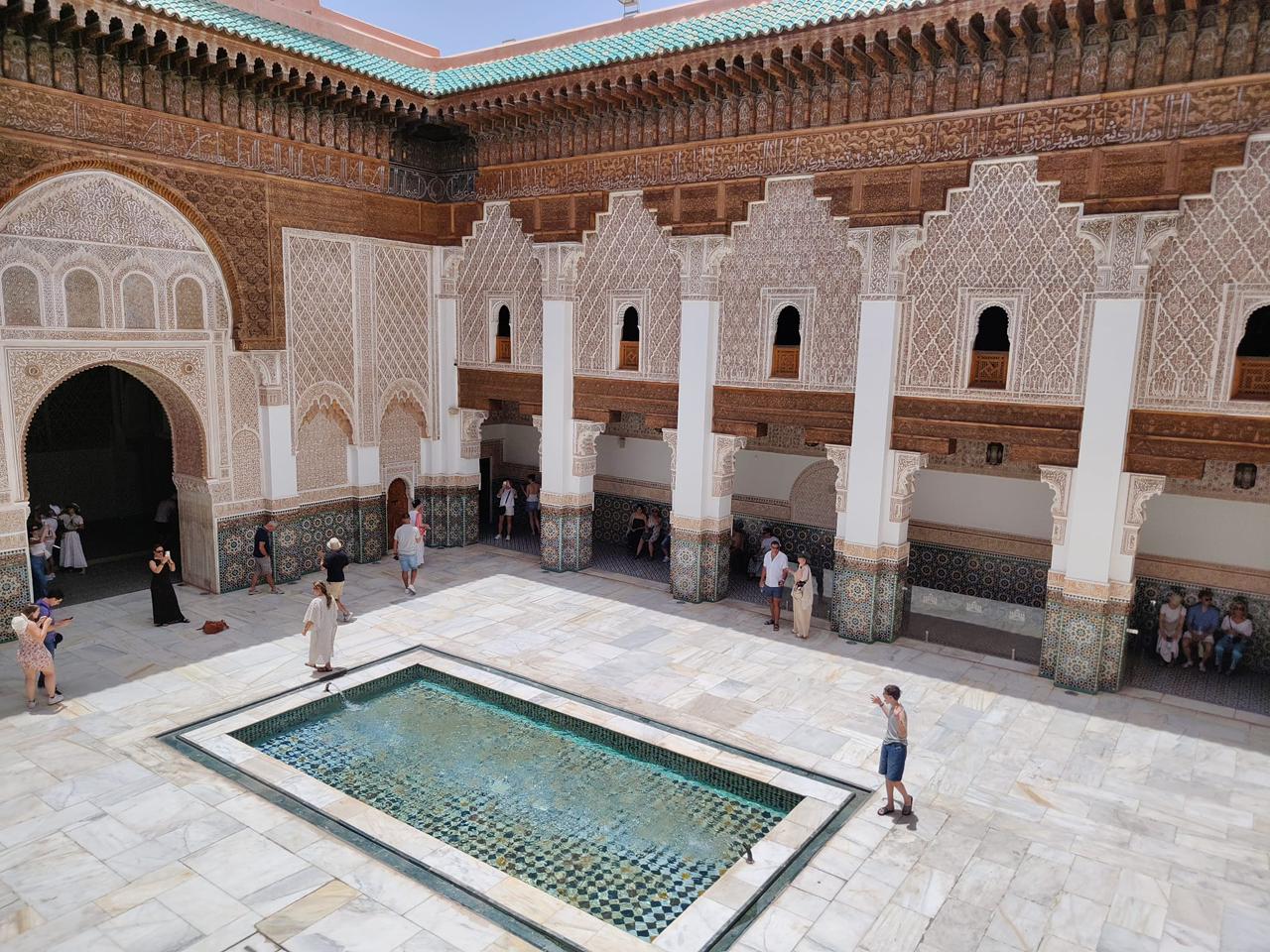
The Morocco that exists away from the main tourist routes is some of the most rewarding travel the country has to offer.
Taghazout — Morocco’s surf village before it disappears
Taghazout is a small fishing and surf village north of Agadir that has been known to surfers for decades and is only now beginning to attract wider attention. The coastline is exceptional: long Atlantic swells, dramatic cliffs, and a stretch of beach that manages to feel uncrowded even in high season. The village itself is painted in faded blues and whites and has the kind of relaxed, slightly sun-bleached atmosphere that coastal Morocco does better than almost anywhere in North Africa.
It is worth visiting now. Development is coming, and within a few years Taghazout will almost certainly have lost some of what makes it special. At the moment, it still feels like a place you discovered rather than a place that was prepared for you.
Local tipThe fish restaurants along the harbour serve whatever was caught that morning. Arrive early for the best selection and eat with the fishermen rather than at the tables set out for tourists.
Sefrou Cave Houses — the troglodyte village near Fes
Less than an hour from Fes, the town of Sefrou is almost entirely overlooked by the tourists who pour through the imperial city each day. That is a significant oversight. Sefrou has a beautifully preserved medina, a Jewish quarter that predates the Arab conquest, and in the surrounding hills, a series of ancient cave houses carved directly into the rock that have been inhabited continuously for centuries.
The cave houses of the Sefrou region are among the least-visited architectural curiosities in Morocco. They are not signposted or commercialised. You need a local guide to find them and a willingness to walk. But the reward, arriving at a hillside carved into a series of inhabited rooms with a view across the valley below, is something that most visitors to Fes never know exists forty minutes from where they are standing.
Local tipCombine Sefrou with the nearby Aggai waterfall for a half-day trip from Fes that feels nothing like the city you just left.
Akchour — waterfalls and gorges in the Rif
Most travellers who make it to Chefchaouen do not know that roughly 45 minutes away, the village of Akchour sits at the entrance to one of the most dramatic gorge walks in Morocco. The trail follows a river through a narrow canyon in the Rif Mountains, passing a series of waterfalls and natural pools before arriving at the Pont de Dieu, a natural rock arch formed over the river by centuries of erosion.
The walk takes around three hours return at a comfortable pace and the scenery throughout is genuinely extraordinary. The combination of the blue city and this kind of raw natural landscape within the same day is exactly the kind of contrast that makes northern Morocco so rewarding for those who go looking for it.
Local tipWear shoes you do not mind getting wet. The trail crosses the river several times and after rainfall the crossings can be thigh-deep.
“The Morocco that most people never see is often the Morocco they end up talking about most when they get home.”
Build a custom itineraryOuazzane — the forgotten holy city of the north
Ouazzane sits in the foothills of the Rif Mountains between Chefchaouen and Meknes and is almost entirely absent from the standard tourist itinerary. It is a quiet, genuinely lived-in Moroccan town with a medina that sees almost no foreign visitors, a striking mosque at its centre, and a surrounding landscape of olive groves and rolling hills that is beautiful in a soft, unhurried way.
What makes Ouazzane worth a stop is precisely its ordinariness by Moroccan standards. There are no famous sites to check off and no infrastructure built for outsiders. It is simply a Moroccan town going about its business, and spending a few hours walking through the medina and drinking tea in the square gives you a kind of contact with everyday Moroccan life that the more visited cities can no longer offer in the same way.
Local tipOuazzane is known throughout Morocco for the quality of its olive oil. The weekly market is a good place to buy it directly from the producers who bring it in from the surrounding farms.
Ouzoud Falls — the tallest waterfall in North Africa
The Ouzoud Falls, roughly three hours northeast of Marrakech, drop 110 metres through a series of terraces into a river gorge below. They are the tallest waterfall in North Africa and genuinely spectacular in person, particularly in late winter and spring when the water volume is at its highest. Barbary macaques live in the surrounding fig trees and come down to the lower pools in the evening.
Ouzoud is not entirely unknown, but it remains far less visited than its scale and beauty justify, largely because it sits on no standard itinerary between the major cities. That makes it one of those places that rewards the effort of going slightly out of your way, which in this case amounts to a single morning’s drive from Marrakech.
Local tipTake the path down to the base of the falls rather than just viewing from the top. The perspective from below, looking up at the full drop with the rainbow in the mist, is something else entirely.
Zagora and the Draa Valley — the road the caravans used
The Draa Valley is the longest valley in Morocco and was historically one of the great trans-Saharan trade routes, connecting sub-Saharan Africa to the markets of Marrakech and Fes. The road south from Ouarzazate through the valley to Zagora passes through a continuous landscape of palm oases, mudbrick kasbahs, and Berber villages that feels far less visited than the more famous route to Merzouga.
The dunes near Zagora are smaller than Erg Chebbi but the landscape surrounding them, the combination of the palm-filled valley, the distant mountains, and the quality of silence at night, has a particular quality that dedicated Morocco travellers often prefer. It is the kind of place that gets under your skin without announcing itself.
Local tipThe drive through the valley is as much the point as the destination. Ask your guide to stop at Tamnougalt, an extraordinarily preserved ancient ksar just south of Agdz that most people drive past without stopping.
Ifrane and the cedar forests — Morocco’s Switzerland
Ifrane is unlike any other town in Morocco. Built by the French during the protectorate period as a mountain resort, it has Alpine-style architecture, clean wide streets, and a surrounding landscape of cedar forest and mountain meadows that feels completely removed from the image most people have of the country. In winter it receives snow. In summer the air is cool and the light through the cedars is extraordinary.
The cedar forests of the Middle Atlas around Azrou, just south of Ifrane, are home to one of the largest wild populations of Barbary macaques in Morocco. The monkeys are entirely habituated to human presence and wander freely among the trees and along the road. It is a genuinely surreal experience to be driving through what feels like a European mountain forest and have a group of wild macaques crossing the road in front of you.
Ifrane and Azrou sit naturally on the route between Fes and the Sahara, which is why we include them on our 3-day Marrakech to Fes via the Sahara itinerary. They are the kind of stop that surprises people who were not expecting them and often becomes one of the highlights of the whole journey.
Local tipThe lion statue in the centre of Ifrane, carved from a single block of stone, is a local landmark with a history that your guide will enjoy telling you. It is worth asking about.
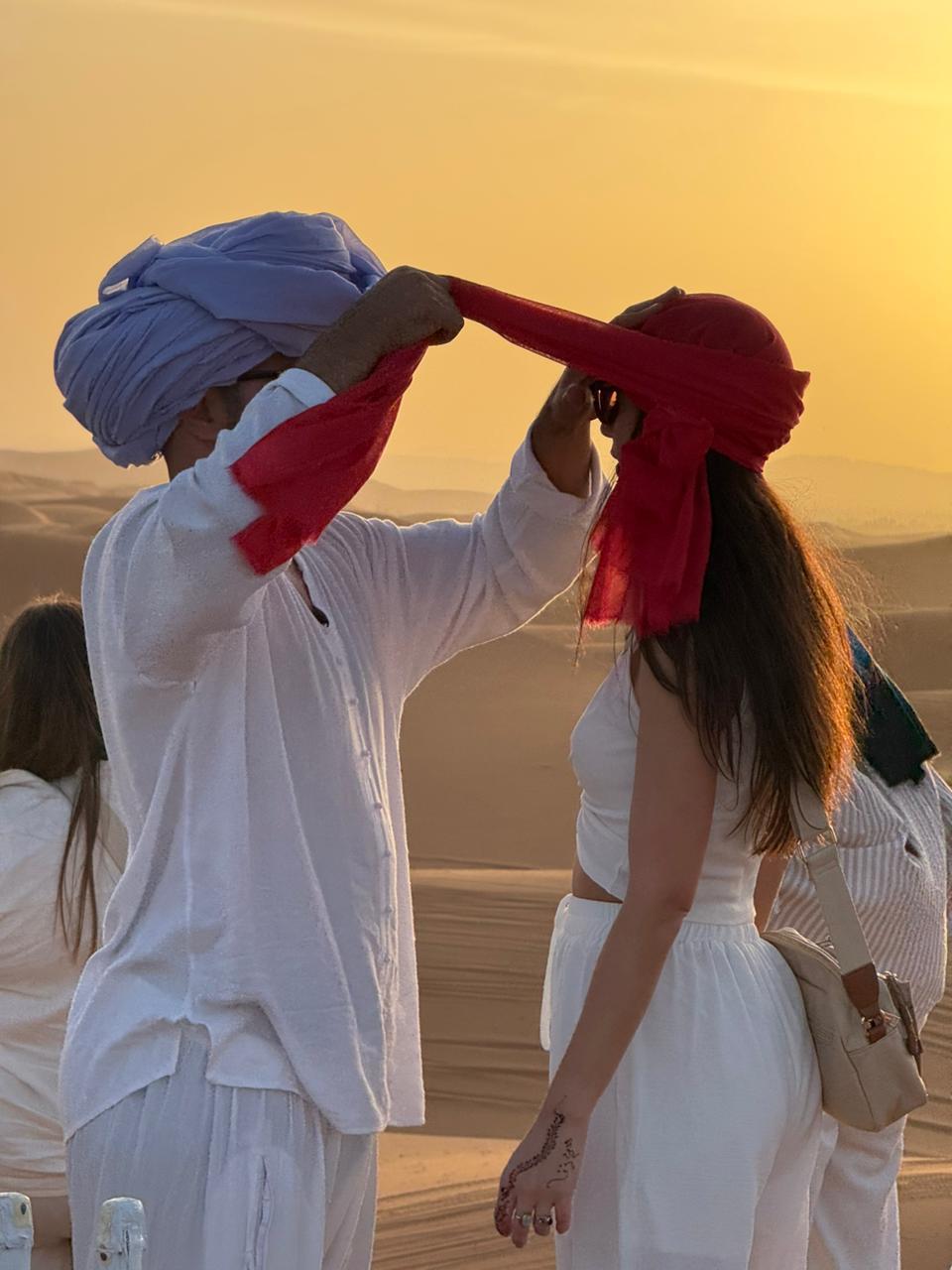
The best discoveries in Morocco are often the ones that were not on the original itinerary.
Morocco is a country that rewards curiosity. The more willing you are to go slightly off the obvious route, to stop somewhere unplanned, to ask your guide what is around the next corner, the more the country gives back. The ten places on this list are all accessible, all genuinely worth your time, and all the kind of places that tend to become the stories people tell about Morocco long after they return home.
If you want to build an itinerary that includes some of these less-visited places alongside the highlights, we would be glad to help. Every tour we run is customisable, and finding the right balance between the unmissable and the unexpected is something we genuinely enjoy doing. Get in touch with our team and tell us what you have in mind, or browse our full range of itineraries for a starting point.